


Which binding is right for your booklet?
Printing a brochure, event programme or training manual? The way you bind it affects how it looks, how it opens and how easy it is to use.
A short programme might only need staples through the spine, while a workbook needs to stay open on a desk. A thicker company brochure may suit a glued, square spine.
At Whitstable Print, we can help you choose a binding that suits your page count, budget and purpose. Here’s a guide to the options.
Saddle stitched: a practical choice for thinner booklets
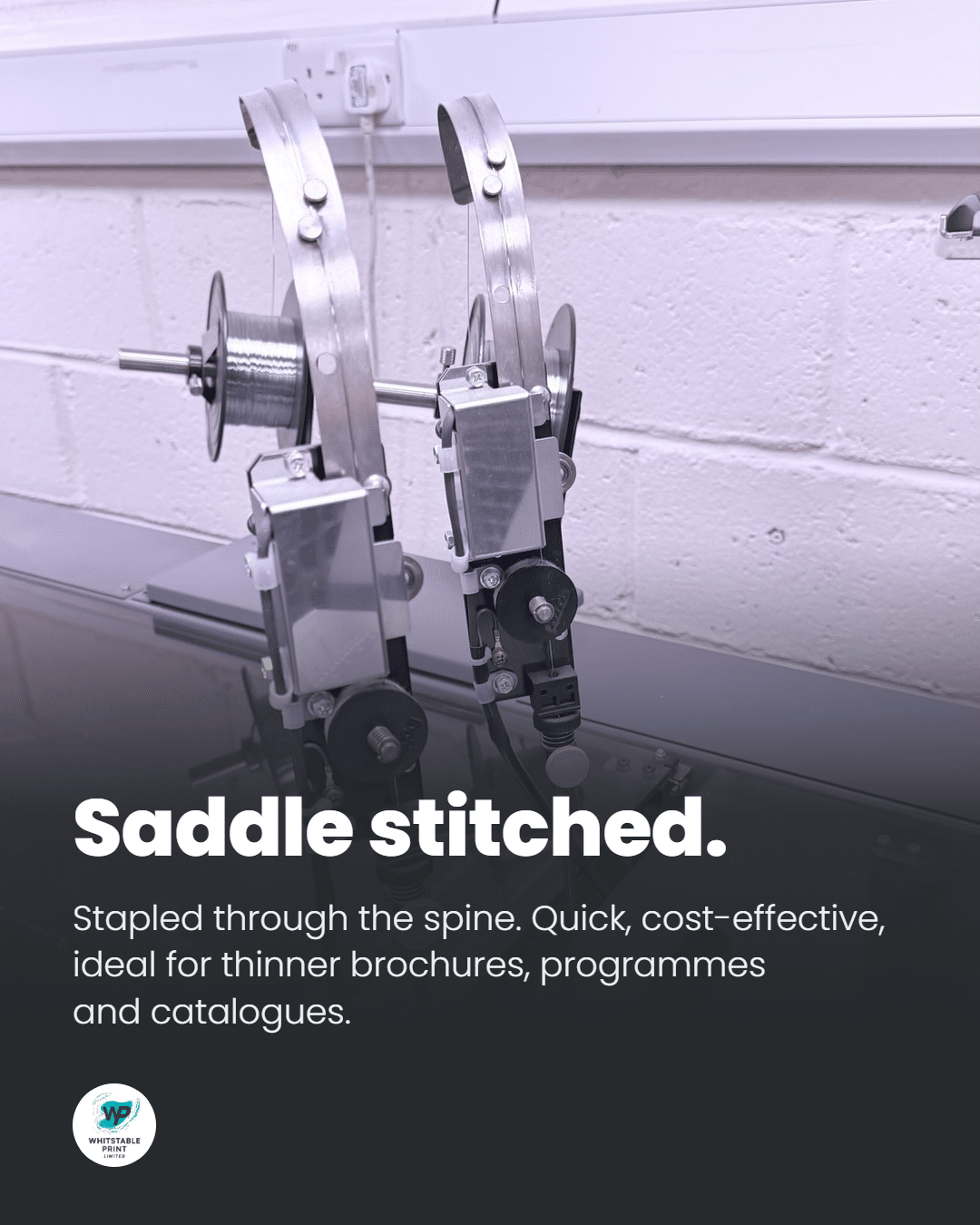
Saddle stitching uses staples through the folded spine to hold the pages together. It’s a familiar finish for brochures, programmes and smaller catalogues.
It’s a cost-effective option when you want a neat booklet without a substantial spine.
Often suitable for:
-
Event programmes
-
Short company brochures
-
Smaller product catalogues
-
Community newsletters
Saddle stitched booklets usually need a page count in multiples of four, including the cover. Each folded sheet creates four pages, so it helps to plan your content around this from the start.
The number of pages a booklet can comfortably hold depends on the paper thickness as well as the page count. We can advise before you finalise your artwork.
Square back: stapled binding with a flatter spine
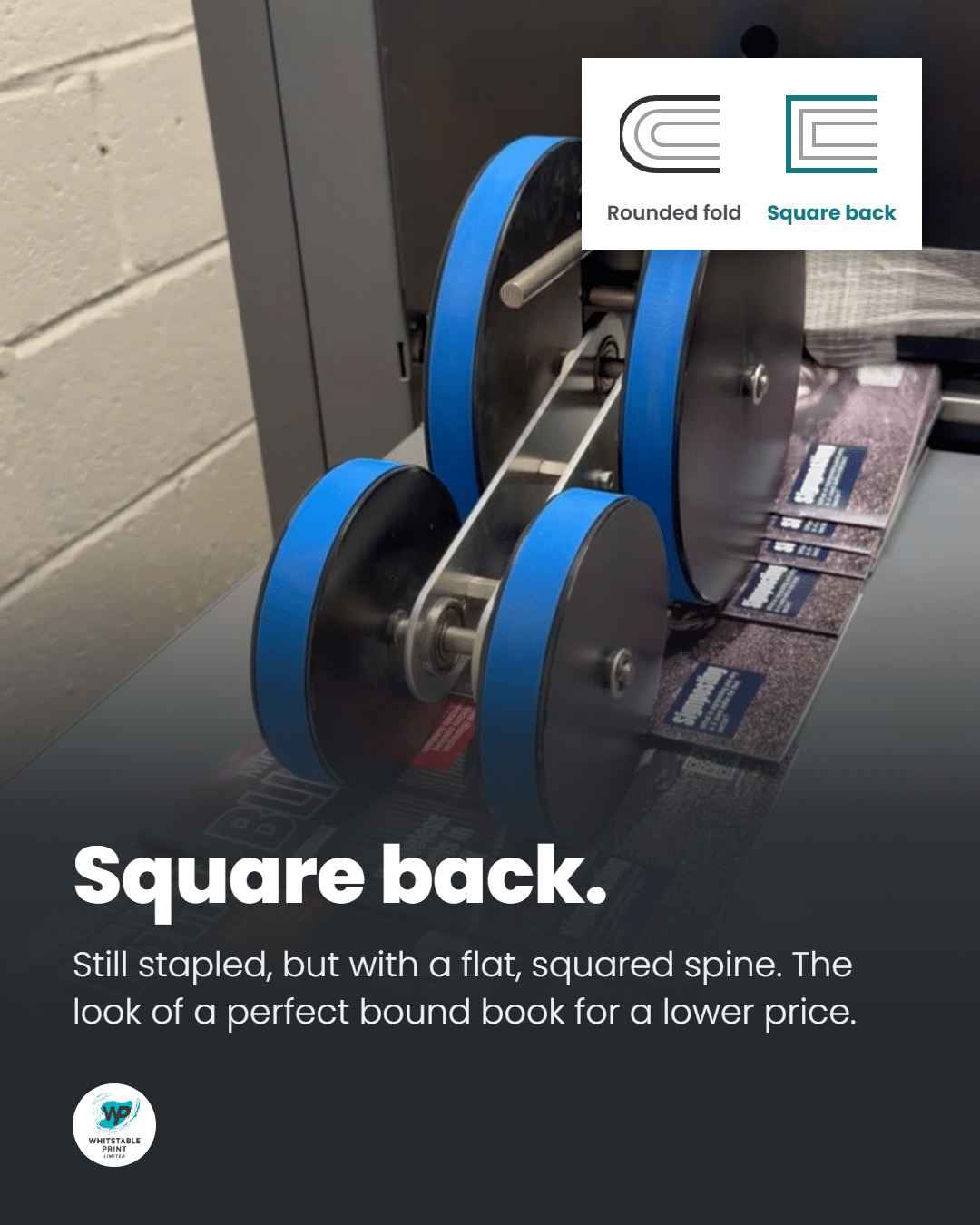
Square back binding starts with a stapled booklet, then shapes the folded spine into a flatter, square profile.
This gives it an appearance closer to a perfect bound book while retaining the stapled construction. It can be a useful option if you want a more substantial look at a lower cost than perfect binding, depending on the job.
Often suitable for:
-
Company brochures
-
Product catalogues
-
Presentation booklets
-
Publications that benefit from a defined spine
Suitability depends on the booklet’s thickness and paper choice. If your booklet is very thin, there may not be enough material to create a noticeable square back.
Perfect bound: a glued spine for thicker publications
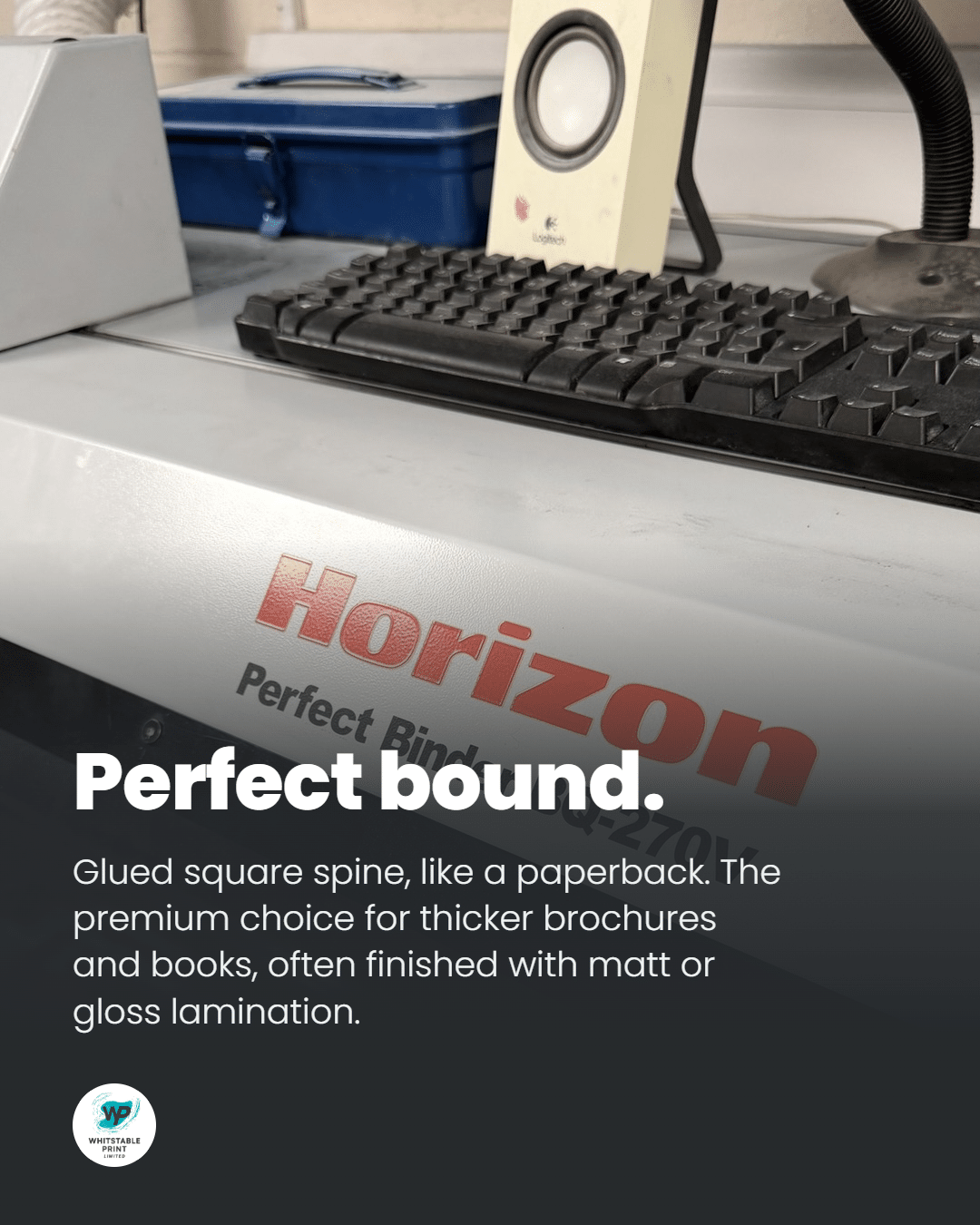
Perfect binding holds the pages together with adhesive along the spine, with a cover wrapped around them. It’s the style commonly associated with paperback books.
The result is a clean, square spine that can carry a title or branding when it’s wide enough.
Often suitable for:
-
Thicker company brochures
-
Larger catalogues
-
Books and reports
-
Publications intended to be kept and referred to
Perfect binding needs sufficient thickness to form a suitable spine. Page count matters, but so does paper weight: two publications with the same number of pages can have different spine widths.
The cover artwork also needs to allow for the spine. Ask us to confirm its width before completing your cover design.
Wire-O: ideal when your booklet needs to lie flat
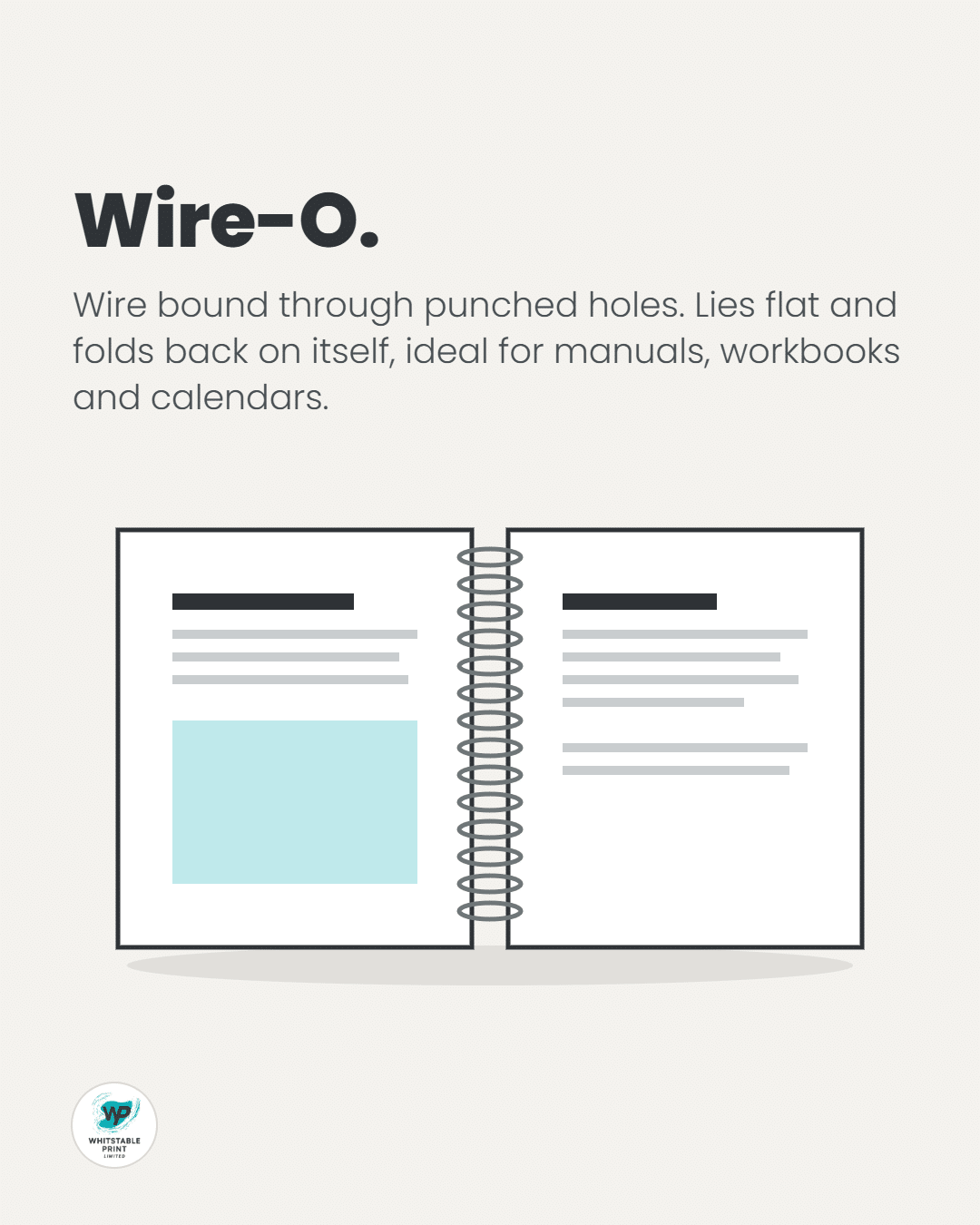
Wire-O binding uses a wire threaded through punched holes along the edge of the pages.
It allows the booklet to lie flat and fold back on itself, making it particularly useful when someone needs to write in it or follow instructions while working.
Often suitable for:
-
Training manuals
-
Workbooks
-
Reference guides
-
Calendars
When designing for Wire-O binding, leave enough space along the binding edge for the punched holes. Keep text, page numbers and important images clear of this area.
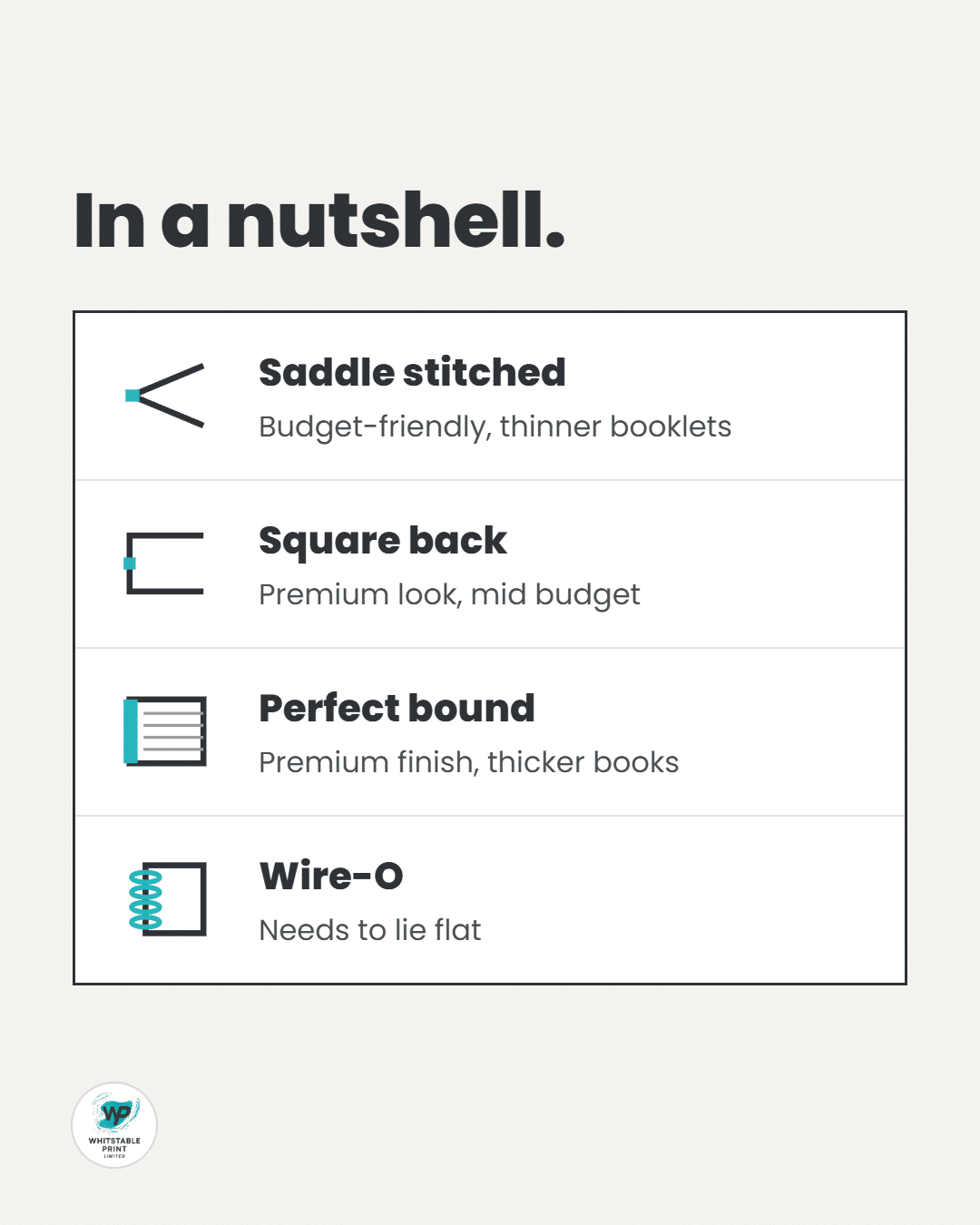
Booklet binding options at a glance
How to choose the right binding
Start with how people will use your booklet.
- A short handout for an event, saddle stitching may be a practical choice.
- Will sit on a shelf and represent your business over time, a square back or perfect bound finish could suit it well.
- Needs to be kept it open while writing or working. Wire-O is worth considering.
Then look at your page count, paper choice and budget together. Binding works best when these decisions are made before the artwork is finished, because each option has different requirements for margins, page layout and covers.
Ask Whitstable Print for advice
You don’t need to know all the printing terminology to get started.
Tell us how many pages you have, what your booklet is for and how many copies you need. If you have a budget or a particular finish in mind, let us know that too.
Our Whitstable Print team will recommend a suitable binding and help you prepare your artwork for print.
Get in touch to discuss your next brochure, booklet or workbook.